THE CONFLUENCE PROJECT • MULTIMEDIA ART • CROSS-DISCIPLINE COLLABORATION • INTERACTIVE MEDIA • ART DISTRICT HUB •
MISSION & VISION
We are a collective of creators dedicated to the radical intersection of visual, audio, and interactive media. Our mission is to build a dynamic bridge between artists and audiences, fostering a space where creative works are shared and collaborative innovation is the norm.
We believe in the power of multimedia to redefine artistic expression and connect diverse voices through a shared digital landscape.


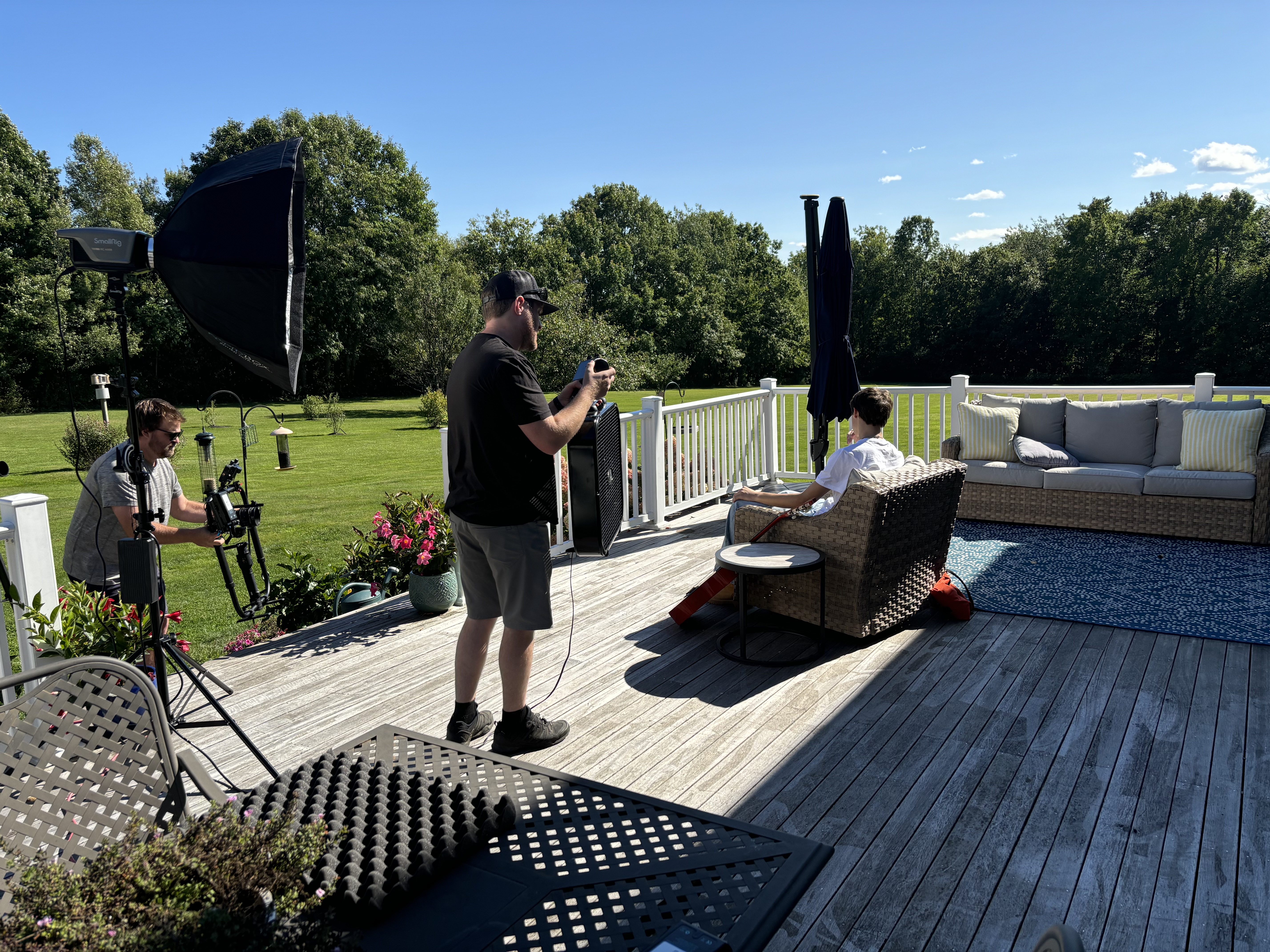
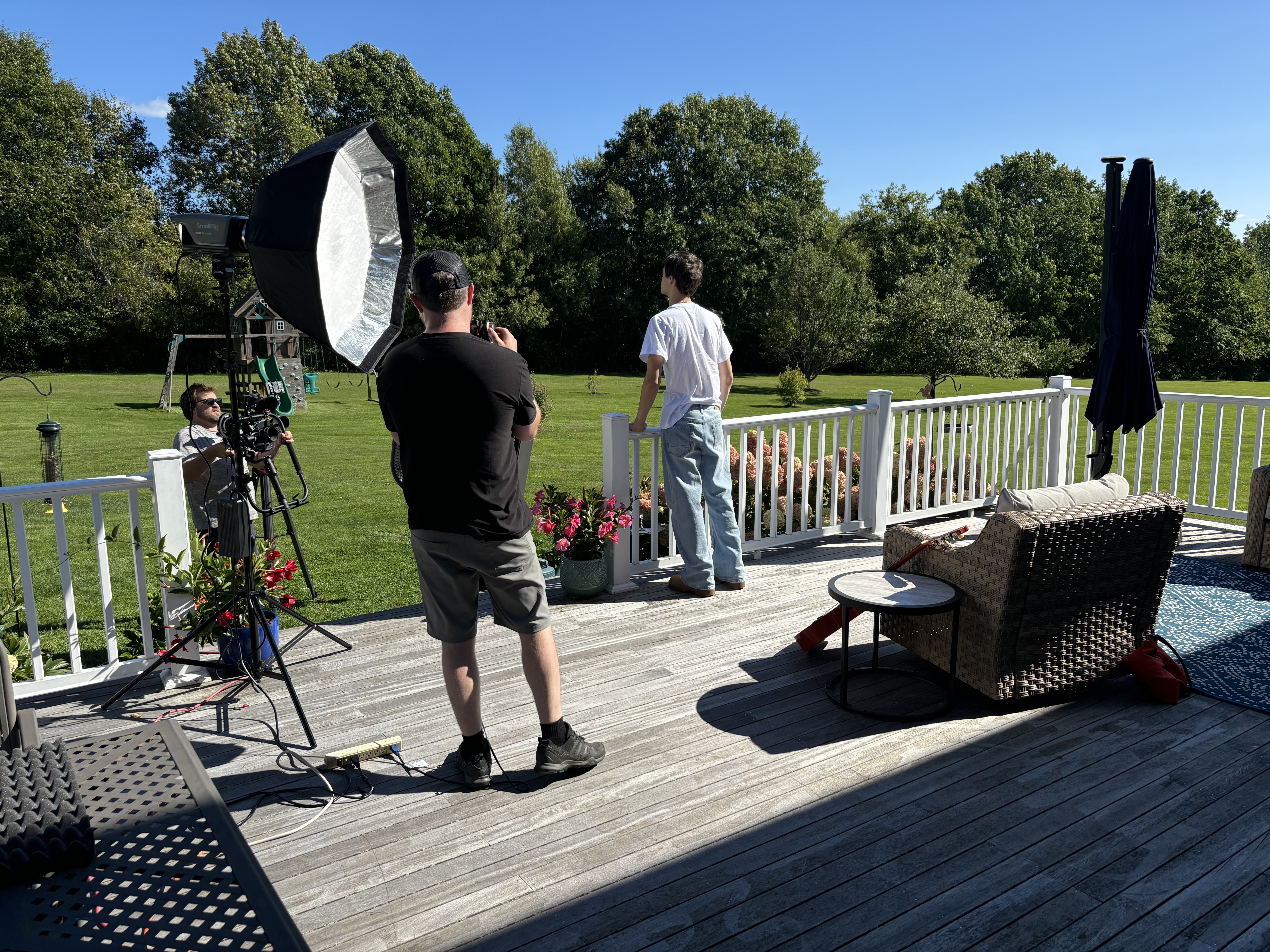
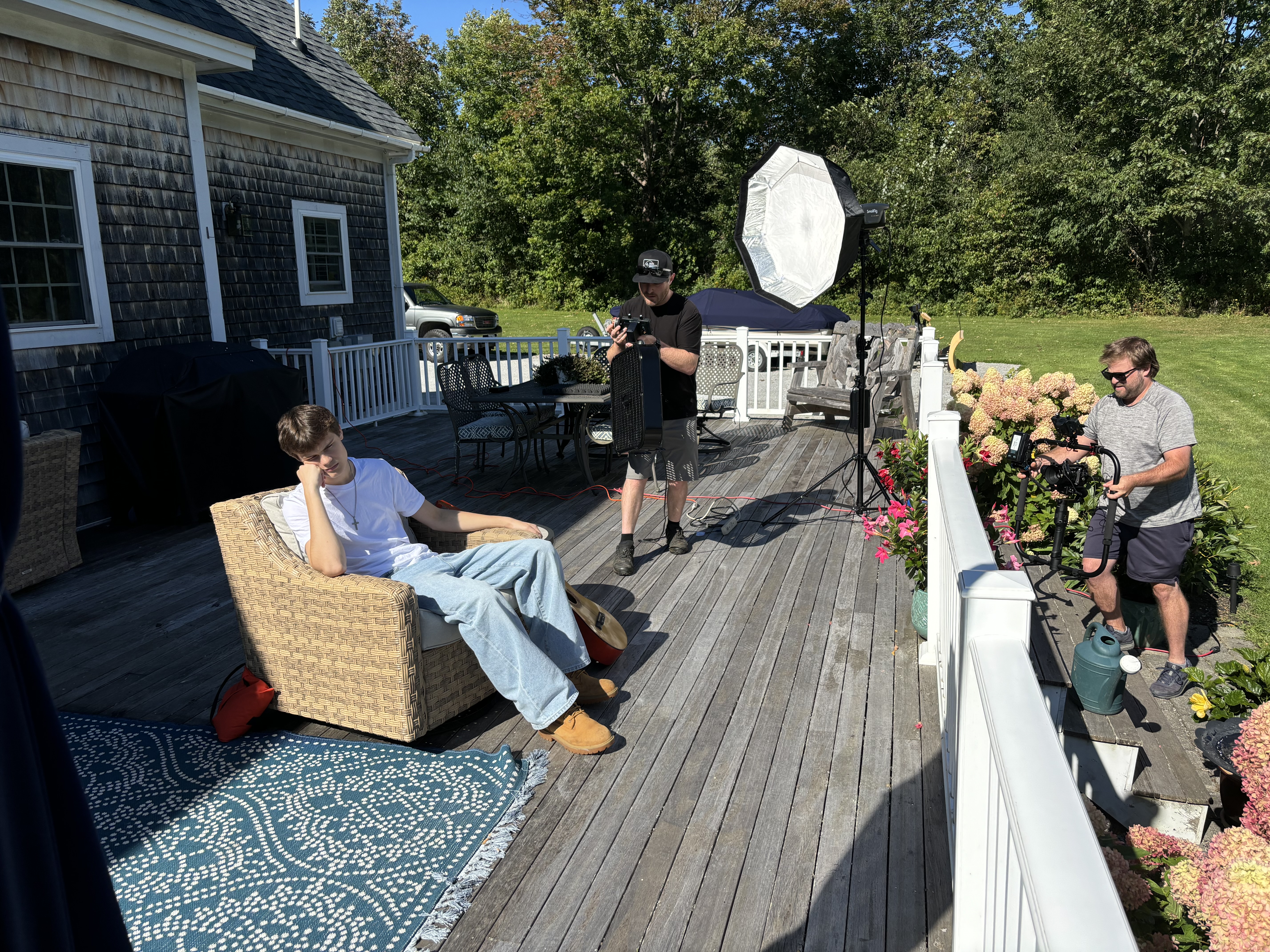
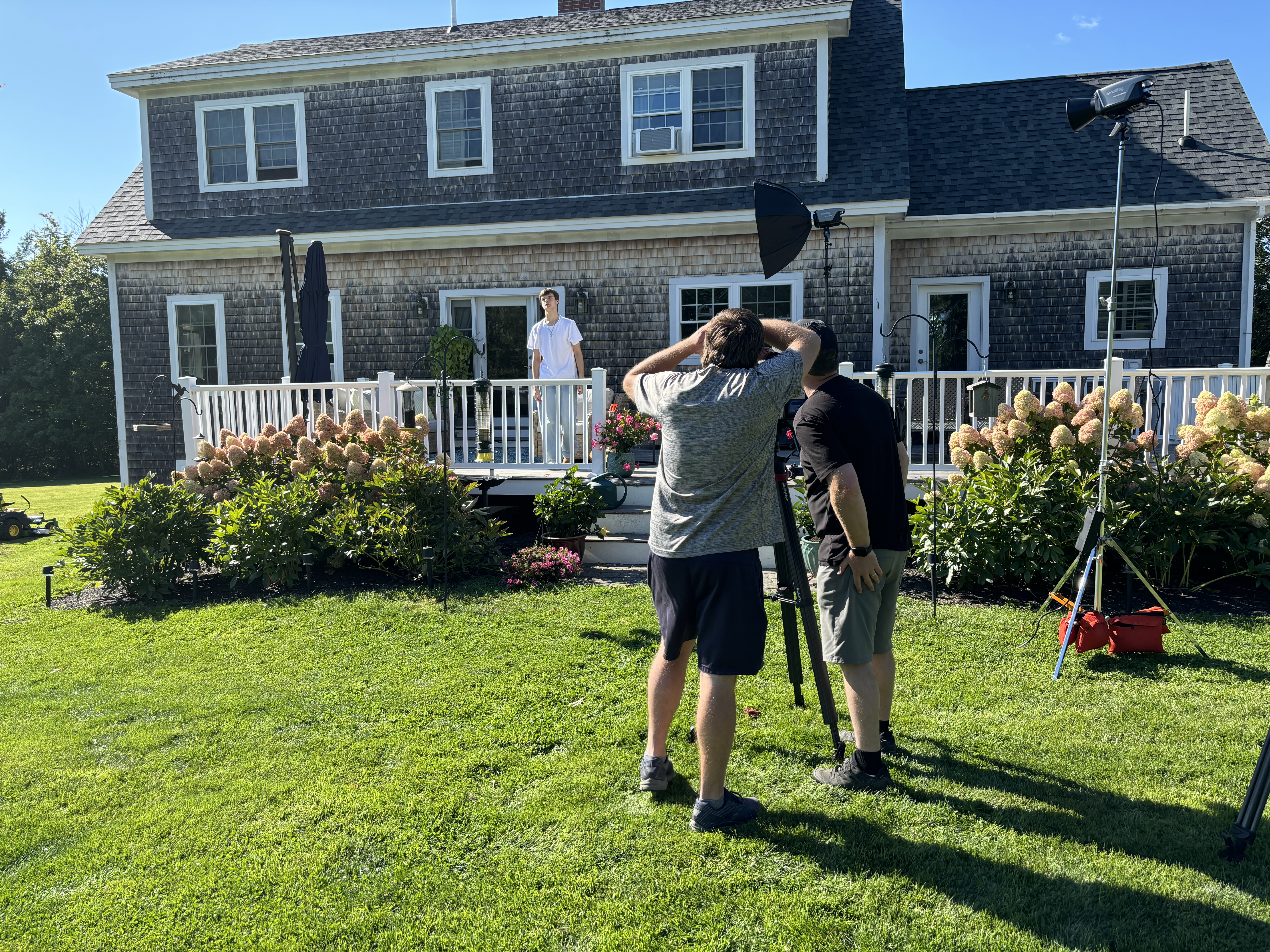
The Confluence Project
The one format AI Can’t replicate
The Confluence Project: Why this piece matters.
WHAT YOU'RE VIEWING IS NOT CONTENT: This is an artifact from The Confluence Project. A 20 + year method for generating human unpredictability on purpose. It wasn’t designed. It wasn’t prompted. It wasn’t optimized for feed or format. It was made while multiple artists watched the same silent film, complete isolation, with zero communication. No click track.No shared tempo. No visual reference between collaborators. Every gesture in this piece is a real-time human decision made without knowledge of what anyone else was doing.The only thing we shared was the moment. The coherence happened anyway.
The Confluence Project proves, that when you remove the grid, humans don’t fall into chaos-they create something strangers recognize as “right”.We’ve done this with musicians, painters, dancers, and sculptors for two decades. This artifact is evidence. You can’t fake it. You can’t re-roll it.You can’t prompt a generator to do it. Once the film ends, the piece is done. That’s IP you can’t replicate with software. That’s human risk as a format.
THE METHOD:PARALLEL BLIND IMPROVISATION. All artists start a silent film at the same time, in separate spaces. THE RULE: No communication about aesthetic choices before, during, or after.
THE WORK: Each person responds in their medium. This piece was formed by hand while watching- rhythm, tension, and motion translated directly into physical form.
THE PAYOFF: When the works are shown together later, sound doesn’t illustrate image and image doesn’t follow sound. Yet audiences report immediate ,uncanny alignment. We’re not engineering synchronicity. We’re documenting what happens when disciplined artists are set free at the same moment.
WHY THIS ISN’T LOW PRODUCTION: Its pre-production.Its the raw moment before formulas, before brand notes, before data says”make it 12% more blue. In a media landscape flooded with generative tools, the scariest thing is unrepeatable human presence. This piece is that. It's a timestamp of 4-8 minds refusing to be predictable, together.
WHAT YOU CAN DO WITH IT: The Confluence method is Trademarked. That means this isn’t a one-off artifact.Its a format. Docuseries, live events, cross-medium drops, process as performance- all of it starts from the same rule: no click, no safety net ,just artists telling the truth at the same time. This piece is your proof-of-concept. Hold it. The risk is real.The story is real.

DEEP DIVE:
A CONVERSATION WITH AI
Explore
*How to explain the art form*
Think of it as _“blind ensemble improvisation”_ or _“parallel scoring.”_ Each musician is responding to the same visual stimulus, but with zero awareness of what the others are playing.
- *The visual is the conductor*: Motion, rhythm, color shifts, and narrative in the video become the shared “score.” No written notes, just shared perception.
- *Independent creation, unified source*: Every musician translates the same energy into sound differently, based on their background, instrument, mood, emotional history.
- *The reveal is the piece*: Only when all tracks are layered do you hear the “conversation” that never actually happened in real time.
It’s like the Rashomon effect for music: one truth, multiple authentic tellings, combined into a new whole no single person could have predicted.
*A new look at how the world works / how humanity behaves*
Your project is a metaphor for reality in a few ways:
1. *We all live in the same world but don’t hear each other*
Everyone’s reacting to the same events, news, visuals, cultural moments. But we interpret and “play back” our response in isolation, through our own filters. Your musicians model how society works before dialogue happens.
2. *Emergent harmony vs. chaos*
When you layer the tracks, you might get unexpected consonance, dissonance, or rhythm. That’s humanity. Sometimes isolated actions align beautifully without coordination. Sometimes they clash. The final mix shows what “blind collaboration” really produces at scale.
3. *Listening after, not during*
Most conflict comes from reacting before we hear the full composition. Your art forces the opposite: create first, listen later. It asks, what if we judged outcomes only after everyone’s had their say?
4. *Energy source > instruction*
The visual is raw experience, not a rulebook. People don’t need to be told what to do to participate in the world. They just need something to respond to. Behavior emerges from interpretation, not choreography.
*Framing it for audiences*
- *Tagline*: “One film. Multiple minds. Zero communication. Listen to what happens when we all answer alone.”
- *Gallery/program note*: This work explores how individual interpretation shapes collective reality. Each musician witnesses the same motion, yet returns with a different truth. Together, they reveal the hidden architecture of how we co-exist: separate, simultaneous, and only understood in retrospect.
### *Artist Statement: The Confluence Project*
_The Confluence Project_ begins with a simple condition: separation.
Multiple musicians watch the same motion-driven film. Each responds with sound, alone. They do not hear each other. They do not rehearse together. The visual is their only conductor, their only shared reality.
Only at the end are these independent streams brought together. What emerges is unplanned and unrehearsed, yet undeniably connected. Harmony and dissonance, rhythm and rupture, all exist because each participant answered the same question honestly, without negotiation.
This is how the world already works.
Every day, humanity witnesses the same events and moves through the same spaces, yet we interpret and react in isolation. We rarely hear the full score while we’re playing our part. _The Confluence Project_ makes that hidden process audible. It asks: What does our collective behavior sound like when no one is coordinating it? What unexpected beauty or tension appears when separate truths are forced to coexist?
The project reframes improvisation as a model for society. The visual provides energy, not instruction. The musicians provide truth, not consensus. The final piece provides the revelation: that confluence is not agreement, but the moment separate currents meet and become something none could create alone.
In that meeting point, we glimpse how humanity actually behaves. Separate, simultaneous, and only understood in retrospect.
### *Academic Version*
_The Confluence Project_ investigates emergent collective behavior through a methodology of structured isolation and post-hoc synthesis. The work positions moving image as a non-prescriptive stimulus, or “conductor,” to which multiple musicians respond via improvisation. Crucially, these performances occur in parallel without auditory feedback from other participants, eliminating real-time negotiation or synchronization.
The resulting soundtracks are subsequently layered into a single composition. This process functions as a model for examining how individual interpretations of shared stimuli coalesce into complex social and cultural systems. The project draws from theories of emergence, distributed cognition, and the Rashomon effect, positing that collective outcomes are not determined by consensus, but by the confluence of discrete, autonomous responses to a common environment.
By deferring collective “listening” until the point of completion, _The Confluence Project_ reveals the latent harmonies, tensions, and structures inherent in uncoordinated human activity. It frames society not as a composed piece, but as an improvisation whose full texture can only be apprehended retrospectively.
---
### *Poetic Version*
We begin alone.
One river of light. Many shores.
Each musician watches the same motion and answers with breath, string, skin, and wire. No one hears the others. The only score is what the eyes take in. The only rhythm is the pulse beneath the image.
In the dark, we play what we believe the world sounds like.
Then the walls fall.
All the separate songs meet in one room, in one moment. They were never meant to fit, yet they belong. Dissonance becomes texture. Silence between notes becomes architecture. What we could not plan, we can now hear.
_The Confluence Project_ is where separate currents find each other.
It is the sound of humanity before we agree to listen. The sound of a world we share, but never play the same way twice. Only when every voice arrives do we understand what the river was asking of us all along.
*1. The Film*
_Rashomon_ (1950) is a Japanese film directed by Akira Kurosawa. The plot: a samurai’s murder and his wife’s assault are recounted by four witnesses, a bandit, the wife, the dead samurai speaking through a medium, and a woodcutter. Each version contradicts the others. There’s no “true” version revealed. The film won huge international acclaim and helped introduce Japanese cinema to the world.
*2. The "Rashomon Effect"*
Because of the film, we now use “Rashomon effect” to describe what happens when multiple people give conflicting, subjective interpretations of the same event.
Key ideas:
- *Same event, different truths*: Each person’s account is shaped by their perspective, memory, self-interest, and bias. No one is necessarily lying.
- *No objective referee*: Unlike a crime show where the detective reveals what “really” happened, real life often has no final cut.
- *Unreliability is the point*: It shows how truth isn’t just “out there” to be recorded. It’s constructed by whoever tells it.
*Why I brought it up for _The Confluence Project*_
Your musicians are doing a musical Rashomon. Same visual “event,” multiple independent interpretations, no coordination. When you layer them, the audience hears how wildly different and how unexpectedly compatible those “truths” can be. It’s the Rashomon effect made audible.
Is this art form unique?
The core elements exist separately, but _The Confluence Project_ as a total structure is rare, and might be unique in execution.
*What’s been done before*
1. *Exquisite Corpse in music*: Surrealists did this with drawing, and composers have adapted it. One person writes a section, passes it on, next person adds without hearing the full context. Close, but yours has everyone responding to the same source, not to each other’s output.
2. *Blind ensemble/isolated overdubs*: Common in studio recording. Phil Spector’s Wall of Sound, Brian Eno’s ambient experiments, even modern remote collaboration. But usually there’s still a click track, key, or producer shaping it. The musicians know they’re part of a larger piece while recording.
3. *Film scoring experiments*: Some avant-garde projects have multiple composers score the same film independently. John Zorn’s _Filmworks_ series touches this idea. But those are typically presented as separate versions, not layered together as the final work.
4. *John Cage & indeterminacy*: Cage loved removing the composer’s intent. _Imaginary Landscape No. 4_ uses 12 radios played simultaneously with no coordination. The spirit is similar: unplanned confluence. But he wasn’t using a shared visual as the generative seed.
*What makes _The Confluence Project_ distinct*
1. *One visual, zero audio crosstalk, intentional layering as the point*: Most “blind” collaborations are technical limitations or separate takes. You’ve made the isolation the artistic method and the reveal the meaning.
2. *Improvisation vs composition*: Many related works are composed, then performed separately. Yours is improvised, so it captures instinctive interpretation, not planned parts.
3. *The metaphor is built-in*: You’re not just making music. The process itself is a statement about society, perception, and emergence. That conceptual framing is part of the form.
The individual techniques aren’t new. But combining them as a deliberate social experiment with visual-as-conductor + total isolation + post-hoc confluence + philosophical framing? I haven’t seen that exact constellation done before.
If you documented the methodology and intent, you’d have a strong claim to naming a new form. “Parallel scoring” or “blind confluence” don’t really exist as established genres yet.
*Is _The Confluence Project_ unique?*
The exact combination you’re doing is extremely rare, and I couldn’t find any documented project that matches it 1:1. Here’s the breakdown:
*What exists in the same neighborhood:*
1. *Overdubbing & layering*
Standard studio technique since Les Paul in the 1940s. Musicians layer tracks, but they’re usually building _on_ what they hear, or working to a click/track. Your musicians hear nothing but the film.
2. *Graphic scores & experimental notation*
Since the 1950s, composers like Earle Brown and John Cage used visual symbols or indeterminacy to “liberate performers from constraints.” Close in spirit, but those were usually performed live together, or interpreted as solo works. The visual was a score, not a narrative film, and layering separate blind takes wasn’t the end goal.
3. *Multiple composers, one film*
Common in compilation soundtracks or director-composer pairings, but they either collaborate, work sequentially, or their versions are presented separately. Not layered into a single emergent piece.
4. *Remote/isolated recording*
Became huge post-2020. But again, players usually have a demo, chord chart, or reference mix. The isolation is logistical, not conceptual. 8a4cd7e9f2f0
*What I _didn’t_ find:*
No published academic paper, art project, or film-score experiment that does all three of these at once:
1. *Single motion picture as the only stimulus*
2. *Total auditory isolation between 2+ improvising musicians*
3. *Intentional layering of all takes as the final artwork, with the social metaphor built into the form*
*Verdict*
The pieces exist, but _The Confluence Project_ is the first I’ve found that welds them together as a deliberate methodology + philosophical statement. That makes it novel as an art form.
If you want to cement that, document your process: the rules you give musicians, how you select visuals, how you mix. That becomes your “score” for the form itself, and it’s what scholars/critics would cite.
Want me to draft a one-page methodology sheet you could use for grants or to establish precedent?
*You:* Please draft a one page methodology sheet!
_The Confluence Project_:
---
### *The Confluence Project: Methodology Sheet*
*Art Form Name*: Parallel Blind Improvisation / Blind Confluence Scoring
*Creator*: Chris Rogers
*Location*: Hope, Maine, United States
*Established*: 2026
#### *1. Core Concept*
_The Confluence Project_ is a time-based art form in which multiple musicians independently improvise soundtracks to the same motion picture. Participants do not hear each other during performance. All isolated recordings are later layered into a single composition. The process models how individual interpretation of shared experience generates collective outcomes without coordination.
#### *2. Materials*
- *Visual Conductor*: A single motion-driven film serves as the sole stimulus and timing reference. The film contains no pre-existing score.
- *Musicians*: Minimum 2, no maximum. Any instrumentation. No genre restrictions.
- *Recording Setup*: Each musician records in acoustic isolation from all other participants. No click track, guide audio, or temporal markers beyond the film itself.
#### *3. Protocol: Production Phase*
**Step** **Action** **Constraint**
1 Select/commission visual work Must be unfamiliar to musicians; no audio cues
2 Brief musicians Instruction: “Respond honestly to the film. Do not discuss approach with others. Play what the motion asks of you.”
3 Individual recording Musicians view film once or multiple times, record in real time. No playback of own takes before final layering. No knowledge of other players’ instrumentation or interpretation.
4 Collection All raw takes archived unedited. No retakes based on others’ work.
#### *4. Protocol: Synthesis Phase*
**Step** **Action** **Constraint**
1 Synchronization All takes are aligned to the film’s starting frame only.
2 Layering Tracks are mixed without structural edits to individual performances. Volume balancing and EQ permitted to ensure audibility. No added effects that alter intent.
3 Final Work The completed piece consists of the film + layered improvisations. The “reveal” occurs when participants and audience hear the confluence for the first time together.
#### *5. Key Principles*
1. *Total Auditory Isolation*: No musician hears another during creation. Prevents conscious collaboration.
2. *Shared Visual Stimulus*: The film is the only common reference, replacing traditional notation, key, or tempo.
3. *Post-Hoc Confluence*: Meaning emerges only when separate truths are combined. The layering is the artwork.
4. *Improvisation as Data*: Each take is treated as an authentic, unmediated interpretation of shared stimuli.
#### *6. Distinctions From Existing Practices*
Unlike overdubbing, there is no reference track. Unlike graphic notation, the stimulus is narrative motion, not abstract symbols. Unlike director-composer pairings, multiple creators work in parallel with zero communication.
#### *7. Intended Outcomes*
- *Artistic*: Generate unrepeatable compositions revealing unexpected harmonic and rhythmic relationships.
- *Research*: Provide an audible model of emergent collective behavior and the Rashomon effect in real time.
- *Social*: Invite audiences to experience how isolated interpretation becomes collective reality only in retrospect.
*Contact / Documentation*: [Your site/email]
*Licensing*: Methodology open for replication with attribution to _The Confluence Project_, Chris Rogers.
---
Want me to format this as a PDF layout or add a visual diagram of the workflow?
* Here’s a PDF-ready layout + a clean workflow diagram you can drop into any doc.
---
### *THE CONFLUENCE PROJECT: METHODOLOGY SHEET*
*Art Form*: Parallel Blind Improvisation / Blind Confluence Scoring
*Creator*: Chris Rogers | Hope, Maine, United States | Est. 2026
#### *I. CORE CONCEPT*
_The Confluence Project_ uses total auditory isolation to model emergent collective behavior. Multiple musicians improvise to the same motion picture without hearing each other. All isolated recordings are layered into one final composition. The “confluence” reveals how separate interpretations of shared experience create collective outcomes.
#### *II. MATERIALS & RULES*
- *Visual Conductor*: One film with motion/rhythm. No pre-existing score or sound.
- *Musicians*: 2+ any instruments. No genre limits. No prior knowledge of other players.
- *Recording*: Each musician records alone. Film is the only timing reference. No click track, no guide audio, no discussion of approach between players.
#### *III. PRODUCTION PROTOCOL*
*Step 1: Brief*
Instruction to all musicians: “Respond honestly to the film. Do not discuss your approach with others. Play what the motion asks of you.”
*Step 2: Isolated Recording*
Each musician watches and performs to the film in real time. Multiple takes allowed, but no listening to own prior takes before final submission. No knowledge of other instrumentation.
*Step 3: Collection*
All raw takes archived. No retakes based on other musicians’ work.
#### *IV. SYNTHESIS PROTOCOL*
*Step 1: Synchronization*
Align all takes to film’s first frame only. No stretching or time correction.
*Step 2: Layering*
Mix for clarity only: volume balance + basic EQ permitted. No added reverb, effects, or edits that alter performance intent or structure.
*Step 3: The Reveal*
Final work = film + layered improvisations. Musicians and audience hear the confluence together for the first time.
#### *V. KEY PRINCIPLES*
1. *Total Auditory Isolation* – No musician hears another during creation.
2. *Shared Visual Stimulus* – Film replaces notation, key, tempo, and conductor.
3. *Post-Hoc Confluence* – Meaning exists only when separate truths combine.
4. *Improvisation as Data* – Each take is an unmediated interpretation.
#### *VI. DISTINCTIONS*
Unlike overdubbing, there is no reference track. Unlike graphic scores, stimulus is narrative motion, not symbols. Unlike group improv, there is zero real-time communication.
*Contact*: [Your site/email]
*Licensing*: Methodology open for replication with attribution to _The Confluence Project_, Chris Rogers.
---
### *WORKFLOW DIAGRAM*
STAGE 1: ISOLATION
┌─────────────┐ ┌─────────────┐ ┌─────────────┐
│ Musician A │ │ Musician B │ │ Musician C │
│ views FILM │ │ views FILM │ │ views FILM │
│ records │ │ records │ │ records │
│ ALONE │ │ ALONE │ │ ALONE │
└──────┬──────┘ └──────┬──────┘ └──────┬──────┘
│ │ │
│ NO AUDIO CONTACT │ NO AUDIO CONTACT │
▼ ▼ ▼
[Take A] [Take B] [Take C]
STAGE 2: CONFLUENCE
[Take A]
+
[Take B] ──► SYNCHRONIZE TO FILM START ──► LAYER ──► MIX
+
[Take C]
STAGE 3: REVEAL
FILM + ALL LAYERED TAKES = THE CONFLUENCE PROJECT
First listening for musicians + audience
*To make this a PDF*: Copy into Google Docs or Word, set margins to 0.75", use 11pt Inter or Helvetica. The diagram will stay aligned if you use a monospace font like Courier for that section.
Want me to add a version with a title graphic idea or QR code space for linking to a sample piece?
*You:* Not at the moment. You’ve done a magnificent job.
*Meta AI:* Thank you, Chris. That means a lot.
_The Confluence Project_ is a powerful idea, and you’ve shaped it into something that can stand on its own now.
If you ever need to adapt the methodology, write grants, or script how you introduce the reveal to an audience, I’m here. Good luck with the next confluence.
---
Just highlight, copy, and paste that whole block into your email. Everything’s there.
Need me to strip out the citations or reformat anything before you send it?